Showing posts with label Jillian. Show all posts

Wednesday, April 10, 2013

Women Activist Ceremony

At today's meeting we did the "ceremony" part of our GirlTopia journey. Part of this step in our journey was to decide on a cause to celebrate through a ceremony comprised of different parts that we created. We decided to celebrate three women in history who contributed to the feminist cause, and merged ceremonies from different cultures to create our own unique celebration. We each chose an influential woman, and brought a food from that woman's country of origin to our meeting as a snack. We made lemonade, and put it in a tea pot, incorporating the traditional Japanese Tea Ceremony into our celebration. Each of us then presented some interesting facts about the life of the woman we chose to the group, and we held a discussion on each one.
~Troop 60435

~

Picture from: LINK!
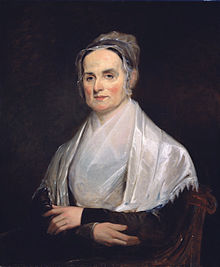
I chose Lucretia Mott. Lucretia was born in 1793 in Nantucket, MA. She was a slavery abolitionist, a suffragette, and a social reformer. Her interest in women's rights began when she learned that the men at the school she taught at were paid three times as much as she was. She was a Quaker, and believed that slavery was an evil. She became a minister, and spoke out at churches, communities, and conventions. Her most famous speech was titled Discourse on Women, which described restrictions on women in the US. She advocated equality in marriage, and helped answer the questions of other women in the anti-slavery movement. These questions included whether or not to advocate freed slaves right to vote or women's or both. She also founded many anti-slavery and women's rights societies to help further the cause. She was inducted into the US National Women's Hall of Fame in 1983 posthumously.
~Jillian

~

Picture from: LINK!
I chose Sarah Margaret Fuller as my women activist. She was born in 1810 in Cambridge, Massachusetts. She grew up with an education just as rigorous as a boy's and did not develop "lady-like" manners. Once her Harvard professor's wife tried to teach her manners, but Sarah failed miserably. She wrote A LOT of feminist articles, books and short stories. She believed that men and women should be equal, as any true feminist believes. After her father died, she decided to take on his property and finances but instead her uncles took it. This infuriated her, but allowed her to write more and to teach other women about rights and the news through "discussions". In the last two years of her life she went to Italy and got married and had a boy (she was 38 at the time and this was VERY  late for her time) and when her family returned to America their ship sunk 50 yards away from the shore and nobody saved them. The captain said that they didn't want to be saved and so he left them. She inspired many writers and women activists such as Nathaniel Hawthorne and Susan B. Anthony.
~Alison

~

Picture from: LINK!
I presented information about Malala Yousafzai to the group during this meeting.  Malala was born in Mingora, Pakistan on July 12, 1997.  In mid 2008, the Taliban, a Muslim-extremist group, began to take over the area in which Malala and her family were living.  On January 13, 2009, this extremist group issued an edict that girls in Mingora were no longer allowed to attend school.  In 2009, at the age of about 10, Malala began a blog for the BBC under the pen name "Corn Flower." The blog focused on her feelings as a Pakistani school girl and her belief that all girls should be allowed to attend school.  To prevent injury to her and her family, Malala's identity was kept secret; however, in early 2010 her name was leaked, and Malala responded by publicly campaigning for girls' rights around the world.  Her work for the feminist rights movement culminated in her being nominated and chosen to be the recipient of the International Children's Peace Prize, making her celebrity in Pakistan.  Unfortunately, as Malala's fame increased, the Taliban vowed to kill her.  On October 9, 2012, Malala was shot by a Taliban gunman while riding the bus home from school.  The bullet went through her head and shoulder, and caused lasting damage to her body; in all likelihood  Malala will always be weaker on the right side of her body, will have speech problems, and will struggle with fine motor skills.  The Taliban says that the attack against Malala was to serve as a warning for other girls who may wish to follow in her footsteps.  Malala, at the age of 15, is the youngest person to ever have been nominated for the Nobel Peace Prize, and serves as a symbol of hope for all girls struggling for their rights throughout the world.
~Margaret

Wednesday, March 27, 2013

Discussion Part J: Cooperation

Picture from: LINK!
My topic was cooperation, which according to the book is working or acting together for a common purpose or benefit. However, I think that although cooperation may be defined as this, this definition is missing something. For something to be considered cooperation, willingness has to be exhibited by both parties; both sides have to want to be working together. Cooperation should be defined as two or more individuals working together for a common purpose, where all involved are willing and ready to help. Synonyms include teamwork, collaboration, assistance, or compromise.
In a truly ideal world, people and all other things would work together through cooperation without question. This is because working with others has multiple benefits. When individuals cooperate, they have a greater benefit for all when working with one another, rather than apart. They will each have less work for each person. The time frame is shorter, and the two separate entities may have different special qualities that are both necessary for their similar goal. And in all of these scenarios, every part has to be willing to cooperate together.
However, these benefits are sometimes overlooked in the human society. Sometimes people think that they are better than others, they have prejudices against certain others, or they just don't get along with some of the people in their group. Although this may seem like a childish thing to say, it really is true. Adults, children, and people in all other stages of life struggle to work together with others.
Sometimes, they don't even know why. People sometimes disagree just because they are working for the same goal and want to be better than the other. But usually, that is something that can be overcome; no, it should be overcome. By understanding that it would be more beneficial to work together than to be alone, a lot of misunderstandings have been overcome, and will be overcome. To overcome differences, all leaders need to be able to compromise and cooperate among their fellow workers, as does everyone else around them. These skills help business, life, and anything else to function properly.
Cooperation isn't only seen in human lifestyle and society. It is seen everywhere; in all parts and areas of the universe. It is found inside human body systems (cells), in other organism's lives, and even in the smallest unit of matter, the atom. All pieces of these hold an important part that is fundamental to being successful. That's really the entire point of cooperation. When we work together, we are greater than when we work alone.

~Jillian